 The Washington Probe
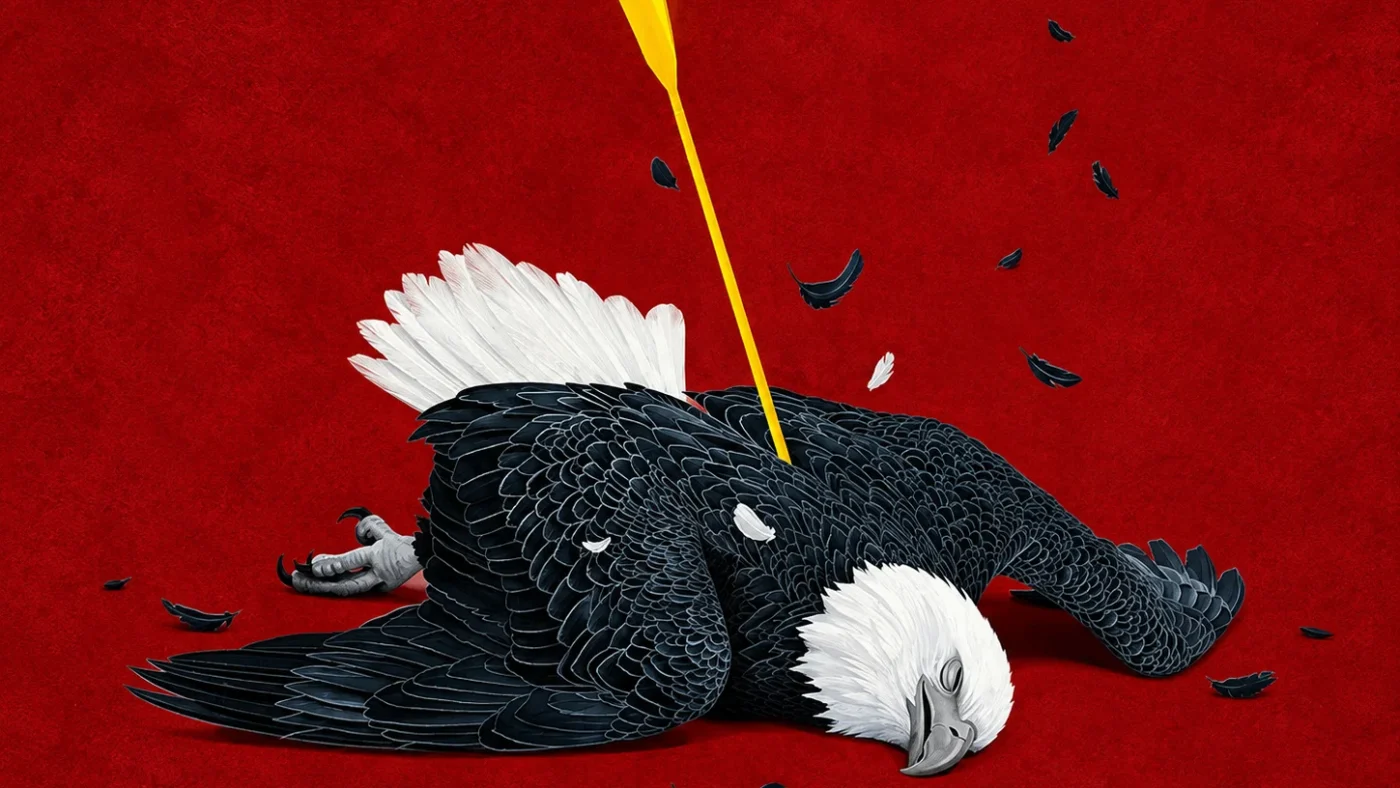
The US has used an effective “imperial cheat code” for decades. Washington can borrow in its own currency, expand military might to a degree few states can match, impose financial sanctions on opponents, and tap a worldwide market thirsty for Treasury securities and other dollar assets. The deal appears self-sustaining.
The dollar appreciates when America is powerful. The dollar bolsters US power.
The issue is that it can also become a vicious circle.
The dollar is still very strong. According to the Federal Reserve‘s latest assessment, released in July 2026, it remains the most widely used currency in foreign exchange transactions, cross-border payments, official reserves, and international debt. In September, the IMF said the dollar’s share had fallen slightly from 57.18 percent in the first quarter to 56.7 percent in the second. It’s a shift, not a collapse. And the difference is significant.
Washington’s problem is that it may not make the distinction.
Every hegemonic power is tempted to treat structural privilege as personal leverage. Why not take advantage of this dependency more forcefully if everyone needs your currency? Tariffs may be used as weapons. Sanctions can be a habit. Financial markets can be weapons in negotiations. The Federal Reserve is not the only entity whose credibility is enhanced by the fact that presidents do not control it day to day; it can be part of a broader political strategy.
That is where monetary power begins to become political risk.
Barry Eichengreen put this differently in his book Exorbitant Privilege: The Rise and Fall of the Dollar and the Future of the International Monetary System (2011). The dollar’s special status gives the United States distinct advantages because foreigners are willing to finance American deficits by holding American liabilities. However, the privilege isn’t static. It depends on the continued appeal of US institutions, markets, and assets. The strength of the dollar reinforces American power, but it is interdependent power.
The United States can thus harm its own source of strength by thinking it is using it.
The cos economic plan. This illustrates the contradiction: the government has constantly tried to change the terms on which the United States trades and finances itself through broad-based tariffs and pressure for a weaker or competitively devalued dollar. It’s seen a clear path in one direction. The dollar fell sharply at the start of Trump’Trump’sd term, then rose again as inflation and interest-rate expectations shifted. In September, Reuters reported that the trade-weighted dollar fell nearly 8 percent from its previous highs, and by October 15, the dollar was once again near an 18-month high.
That volatility is itself revealing.
A reserve currency does not lose its global role because it has a bad quarter. It loses influence when users begin to believe that the political system behind it is becoming less predictable than the alternatives.
Eswar PrasadPrasad’sollar Trap: How the US Dollar Tightened Its Grip on Global Finance (2014) remains useful here because it identified the central paradox long before the current political moment. The dollar survives partly because replacing it is extraordinarily difficult. Other countries possess too few markets with comparable depth, liquidity, and quantities of safe assets. Even governments unhappy with Washington remain heavily invested in the system they resent.
This is why declarations of imminent “de-dollarization” are usually overstated.
But the opposite mistake is just as serious.
Because no obvious replacement exists for the dollar, Washington can convince itself it doesn’t protect the system that supports it.
Signs suggest other governments are thinking differently. In their 2022 study, The Stealth Erosion of Dollar Dominance, Serkan Arslanalp, Barry Eichengreen, and Chima Simpson-Bell found that global reserves held in dollars had been declining through deliberate diversification. Importantly, most of the shift was not simply toward the renminbi. Central banks were spreading their reserves among a broader collection of currencies.
That is a much bigger story than China suddenly replacing America.
The world does not need to choose one new dominant currency. It only needs to become slightly less dependent on the old one.
Daniel McDowell’s The Buck: US Financial Sanctions and the International Backlash against the Dollar (2023) explains why this matters. His argument is not that sanctions immediately destroy dollar dominance. Instead, he argues that repeated financial coercion creates what he calls political risk: governments begin to calculate that holding too many dollar assets or relying too heavily on dollar-based transactions leaves them vulnerable to political decisions in Washington. That encourages the construction of alternatives.
The freezing of Russian reserves after the invasion of Ukraine was an extraordinary demonstration of this power. It also demonstrated the vulnerability that comes with it. IMF assessments have explicitly noted that sanctions have kept a portion of Russia’sRussia’stional reserves frozen.
Washington may regard that as proof of the dollar system’s strength.
Other governments can regard it as a warning label.
And this is where the military side of the equation comes back in.
America’s financial order has never existed separately from its security order. Adam Tooze’s Tooze’s: How a Decade of Financial Crises Changed the World (2018) showed how deeply American and European financial systems became intertwined after 2008 and how central the United States became to supplying global liquidity during crises. The infrastructure of American hegemony is financial, political, and military.
The current war around Iran reminds us of the cost side of that system. Military power is expensive, and extended conflict creates economic consequences far beyond the battlefield. Reuters reported this week that attacks associated with the Iran conflict have damaged oil and gas infrastructure across the Gulf, disrupting transportation and raising the geopolitical risk premium embedded in energy markets.
A state can have overwhelming firepower and still find that every use of it comes with a bill.
A state can possess overwhelming firepower and still find that every use of it comes with a bill.
A counterargument exists, and it deserves to be taken seriously. America still has extraordinary advantages no competitor can easily replicate: the largest and deepest sovereign bond market, immense private capital markets, a globally dominant financial infrastructure, powerful universities and technology firms, and a currency embedded in decades of contracts and habits. Even current market evidence shows investors still treat US assets as central to the global system. The Federal Reserve itself continues to emphasize the depth and liquidity of dollar markets as a core reason for the currency’scurrency’sower.
That argument is correct.
It is also beside the point.
Empires rarely collapse because someone invents a better empire overnight. They weaken because the dominant power becomes increasingly expensive, unpredictable, or politically difficult for others to accommodate.
That is the real danger facing the dollar.
Not a Chinese coup against the greenback. Not an overnight BRICS currency. Not some dramatic morning when Treasury securities suddenly become worthless.
Something much more mundane.
Governments quietly diversify. Companies write more contracts in other currencies. Central banks accumulate alternatives. Financial institutions build parallel payment systems. Allies hedge against American policy. Investors demand a little more compensation for political uncertainty. Each decision is rational on its own.
Together, they can become a structural shift.
The dollar empire doesn’t need to weaken for American power to weaken. It only needs to become less indispensable.
And that may be the paradox Washington is creating for itself: the United States has spent decades building a system in which the world depends on American power. Its greatest mistake now would be to assume dependence is permanent enough to abuse without consequence.
A reserve currency is not an entitlement.
It is a habit the world has learned to keep.
And habits, unlike empires, can change.
Comments
No comments on this report yet.
Be the first to join the desk.