 The Washington Probe
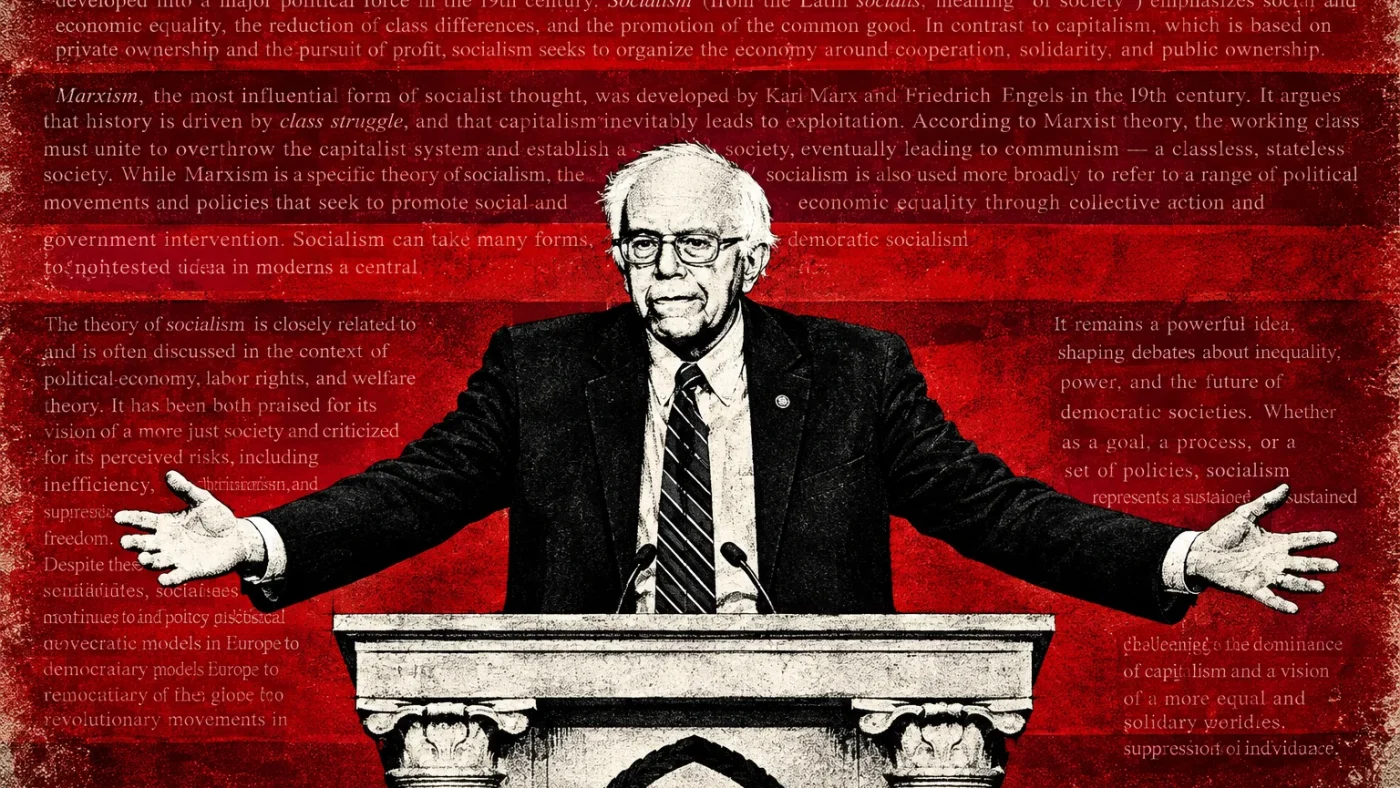
For years, the American Left had to make a hard decision. It could stay politically untainted and largely insignificant, or join the Democratic Party and be swallowed by the party it was about to challenge.
Bernie Sanders did not answer that question. He was too much to ignore.
This could be his greatest legacy from the presidential campaigns.
No one expected Sanders’ 2016 candidacy to challenge anyone. He was an unknown quantity nationally, and was even treated by many in the political establishment as a protest candidate. But he won 23 primaries and caucuses and secured about 46 percent of the pledged delegates. More importantly, he showed it was possible to speak to millions of people without being seen as making “centrist” statements or disguising attacks on billionaires, corporate power, economic inequality, and the assumptions of neoliberalism.
More than electoral significance was at stake. Early supporters of Sanders, the Democratic Socialists of America, swelled in size throughout and after the campaign. The change itself is stark, as DSA puts it in the “About DS” section: DSA had 6,500 members by the end of 2014, 8,500 by Election Day 2016, and over 13,000 joined in the months after the election.
That matters because political movements are not built simply by winning elections. They are built by persuading people that politics belongs to them.
Sanders did that.
But turning this achievement into mythology is dangerous.
The most revealing lesson of the Sanders era may not be that the Left finally discovered how to use the Democratic Party. It may be that the Left discovered how easily a movement can confuse access to political institutions with control over them.
That distinction will determine what happens next.
The old socialist criticism of the Democratic Party’s politics wasn’t entirely wrong. The Democrats are still an integral part of American capitalism, deep-pocket fundraising, professional political networks, and machines of state power. No one has ever argued against the risk of accommodation when someone enters the party.
What was disproved was something narrower: the assumption that entering Democratic primaries necessarily destroys radical politics.
The past decade suggests the opposite can happen. A candidate can enter the Democratic electoral machine and use it to recruit activists, popularize ideas, challenge incumbents, and build political organizations far more radical than the party establishment would prefer.
AlexandriaOcasio-Cortez’ss 2018 defeat of ten-term incumbent Joe Crowley was an early demonstration of this possibility. The point wasn’t merely that one progressive Democrat won a congressional seat. It was that a candidate backed by a relatively young, insurgent political infrastructure could defeat an entrenched member of the Democratic establishment.
The same logic has since appeared in local and state politics.
This is why the old argument that socialist candidates are merely” sheepdogs ” for the Democratic Party has become increasingly difficult to sustain. A sheepdog is supposed to herd dissidents back into the establishment. What does that mean, however, when party members begin building organizations, challenging the status quo, coining new terms for political discourse, and making the party itself fair game?
Both sides are uncomfortable with the answer.
The Democratic Party is not in the hands of the Left.
But the Democratic Partyhasn’tt just taken over the Left.
An unsettled something has risen.
At that instability, politics gets interesting.
Gallup has found major public support for a third major party several times before. In 2015, 60% of Americans said one was needed; in 2016, 57%; and in 2017, 61%. Yet the same polling also demonstrated the enormous gap between wanting another party and actually voting for one.
Americans can hate the two-party system, but at the same time not believe that a third-party candidate can win. It’s not just a cowardly voter. This is a structural issue. Ballot-access laws, single-member districts, winner-take-all elections, presidential electors, fundraising networks, media attention, and the fear of a wasted vote all help keep the existing system in place.
A political movement can hold them up to the light for a whole day of denunciation. It will still have to function within them.
This was whereSanders” approach was more practical than much of the so-called”“Old Lef”” of American parties. He knew it was a problem, and pretending it would just appear because they were present wasn’t an option.
Realism has another pitfall, though.
When a movement depends on Democratic primary contests, Democratic ballot lines, Democratic fundraising, Democratic polling, and Democratic officeholders, it can measure its own success by Democratic metrics: seats won, endorsements won, fundraising, polling sentiment, and media appearances—that’s where insurgency becomes a career path.
This is where Sanders’ revolution will be more difficult than the first.
Running against the establishment isn’t so difficult. This is harder to manage. It’s a huge contrast.
A campaign can promise rent control, universal childcare, Medicare for All, stronger unions, corporate taxes, or even an economic overhaul. Then the government brings budgets, courts, administrative processes, contentious legislatures, corporate pressure, restrictions, bond markets, bureaucratic inertia, and an electorate demanding instant gratification.
Politics is a game of convincing people. Government runs at the speed of institutions.
The Left is getting better at the first.
It still has the second in its learning curve.
Another problem that needs more attention is themovement’ss still-unusual dependence on personality.
Millions found democratic socialism in Sanders himself. Ocasio-Cortez became another. Other key politicians have followed. This has increased visibility; however, if the political infrastructure relies too much on individual politicians’ personal power, it can be a weakness.
A movement can gain momentum around a charismatic individual and engage masses of people. But that is a different kind of movement when the man who can withstand that number has left. That’s why Sanders’s longer-term impact can’t be assessed solely by whether a new Bernie appears in 2028 or 2032. It should be judged by whether common citizens of the United States have established institutions where they can have a say in politics without waiting for a popular politician to tell them where.
For most of the twentieth century, the American Left has heard that socialism is impractical, foreign, or even a political poison. Sanders has helped overcome that mental hurdle. In fact, polls following his meteoric rise indicated that younger Americans were considerably more tolerant of socialism than older cohorts, and the term itself had resurfaced in the political lexicon in a way that would have been hard to fathom a year ago.
But changing political vocabulary is easier than changing political power.
That is the unfinished business.
Sanders proved that millions of Americans were willing to listen to an explicitly class-based argument. He helped bring socialism out of the seminar room and into mass electoral politics.
But the real question is whether or not the Left can win a Democratic primary.
Whether it can generate enough independent power to bring a Democratic political climate to the negotiating table eventually is a much tougher standard.
The American Left need not be presented with the choice between perpetual outsider and comfortable member of the Democratic establishment. Being independentisn’tt enough; it must be independent and not isolated.
That means viewing elections as a battleground, not a goal. It’ss about leveraging the Democratic primary process whenit’ss politically advantageous, and not confusing the Democratic Party with the movement itself. It’s about organizing unions, tenants’ organizations, community organizations, political organizations, and networks at the local level that can endure electoral losses.
And it means keeping the most awkward of the Sanders lessons in mind.
A movement may enter the system without being swallowed.
Each action that moves through a system, however, must answer this question: Who is doing what to whom?
Bernie Sanders changed American politics. He transformed the Left, broadened its electoral aspirations, and fostered a new generation that is no longer convinced that socialism is an “out there” concept.
Now comes the harder part.
The question is no longer whether the Left can enter the Democratic Party.
The question is whether, after entering, it can remain powerful enough to make the party afraid of losing it.

Comments
No comments on this report yet.
Be the first to join the desk.