 The Washington Probe
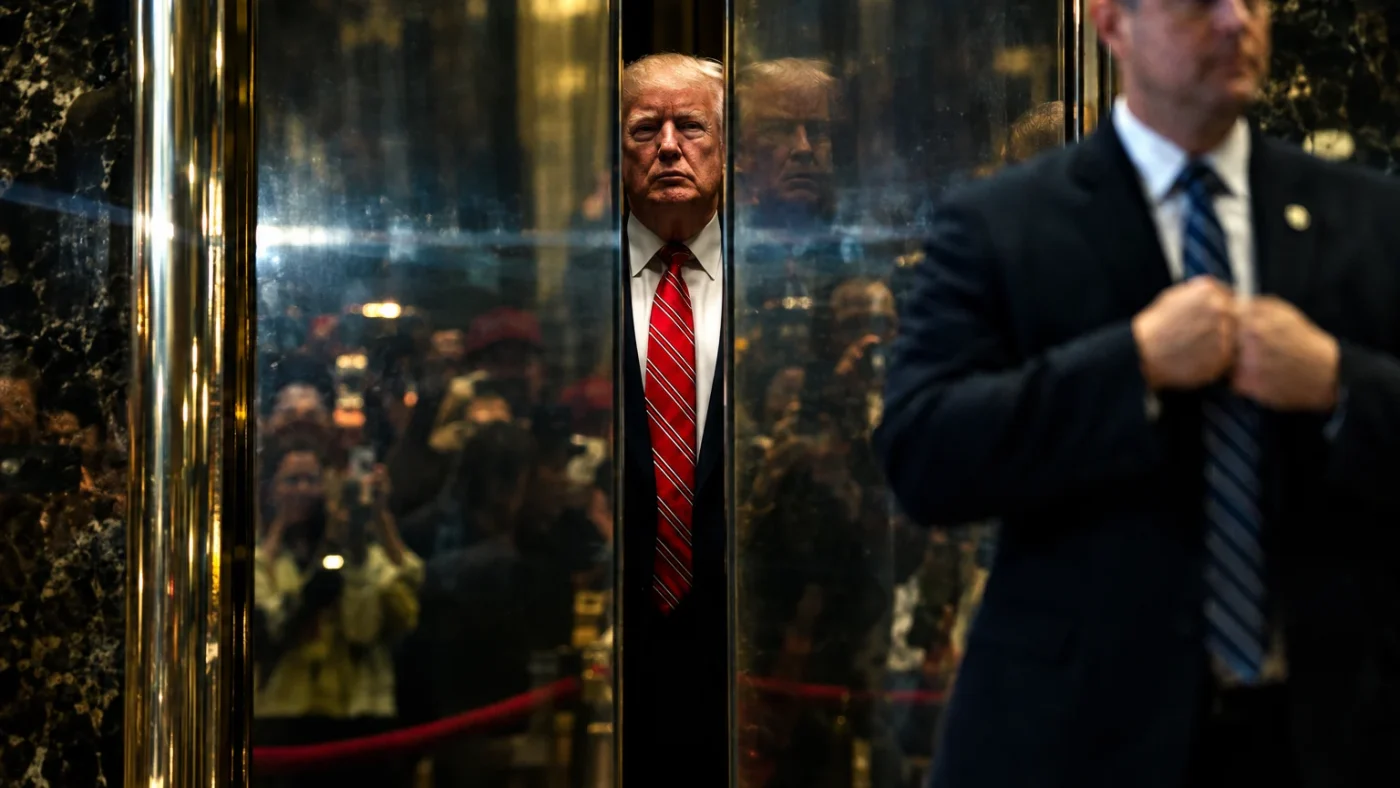
At one time, the ethical boundary between the presidency and a private business empire was considered a basic feature of republican government. The president could negotiate with a foreign ruler, then return home and attend to private affairs. A defense agreement was a defense agreement. A hotel was a hotel. An oil concession belonged to an oil company, not to the White House’s strategic imagination.
That boundary is becoming harder to see.
DonalTrump’s second presidency has produced a political economy in which private wealth and state power increasingly overlap, risking conflicts of interest that threaten democratic integrity.
The geography speaks for itself.
The Trump Organization has expanded its operations in the Gulf, and the administration has cemented political, military, and economic relationships with Saudi Arabia, Qatar, and the United Arab Emirates. Trump properties have been developed and planned in Saudi Arabia, Qatar, the UAE, and other countries, often in collaboration with developers in the State-owned or sovereign-wealth capital. According to the Trump Organization, his sons run the enterprises through a trust. Still, ethics experts have long cautioned against potential conflicts arising from foreign business dealings when the same governments are dealing with the United States.
The overlap is impossible to ignore.
Qatar provides an unusually stark example. In 2025, the White House celebrated more than $243 billion in U.S.-Qatar commercial and defense agreements and a broader $1.2 trillion economic commitment. The package included aircraft, military systems, and expanded security cooperation at Al Udeid Air Base. Around the same time, the Trump family business became involved in a roughly $3 billion Trump-branded golf and residential development in Qatar, with partners linked to the country’s sovereign wealth fund. Qatar also offered Trump a luxury Boeing 747 as a presidential aircraft, a proposal that immediately raised questions about where state hospitality ended, and private benefit began.
No single transaction proves that American policy was purchased.
That is not the real problem.
The deeper problem is that the system no longer requires a crude exchange. Political access, commercial opportunity, national security, and personal branding can reinforce one another without anyone ever writing down the price.
The consequences become more serious when the commodity at stake is not luxury real estate but national security itself, which should make the audience feel the importance of safeguarding these core interests.
Consider semiconductors. In November 2025, the Commerce Department approved exports of advanced Nvidia Blackwell chips to companies in the UAE and Saudi Arabia, authorizing up to 35,000 chips to each country. Washington framed the move as a step toward strengthening technological leadership and deepening strategic partnerships with the group’s remaining key members. That may be true. But the underlying model is revealing: strategic technology is being treated simultaneously as a national-security asset and as a bargaining chip in a larger commercial relationship with wealthy foreign states.
The logic extends beyond chips. A country can increasingly be viewed not as a political society with institutions and citizens, but as a portfolio of useful assets.
Oil fields. Ports. Mineral deposits. Data centers. Semiconductor capacity. Military bases. Sovereign wealth funds. Infrastructure contracts.
Sovereign wealth funds. Infrastructure contracts.
The sovereign state starts to look a bit like a balance sheet.
The old mercantilist impulse in contemporary dress. The language relates to the supply chain, strategic resilience, energy dominance, or technological leadership. The equipment in the basement is older: lock up the resource, run the show, sign up the contract, keep the investment safe, and charge the competition for access.
Venezuela offers the clearest expression of this shift. In August 2026, the White House announced what it called the “biggest oil deal in world history,” saying Washington had secured majority control over more than 65 billion barrels of proven Venezuelan reserves through an agreement giving the U.S. government governance rights, economic ownership, and guaranteed low-cost access to oil. The arrangement included 100-year concessions covering 17 oil fields awarded to a private Venezuelan company.
Read the language closely. It is not merely about democracy. It is not merely about narcotics. It is not even merely about geopolitical influence.
It is about directly influencing foreign policy and national security.
The resource sits at the center of the arrangement, surrounded by military power, diplomacy, and private capital.
That does not mean every American intervention is secretly about oil. It means something more uncomfortable: once oil becomes an explicit object of state acquisition, the traditional distinction between foreign policy and resource extraction begins to collapse.
The same logic is visible in the pressure on Iran. Washington’s recent sanctions have targeted vessels and networks moving Iranian crude and petroleum products. At the same time, the Trump administration has framed control over oil revenues as part of the broader confrontation with Tehran. Meanwhile, the White House’s confrontation with Venezuela has already led to direct American involvement in managing and distributing Venezuelan petroleum resources.
Diplomacy then becomes a negotiation over assets.
War becomes another form of coercive bargaining.
Sanctions become financial weapons designed not only to punish governments but to determine who can sell what, where it can be sold, and who ultimately controls the revenue.
That is a dangerous evolution because commercial negotiations have different moral limits than war, and the audience should feel the need for ethical oversight and caution.
The language of “America First” makes the distinction even harder to police.
The administration says these arrangements bring jobs, cheaper energy, investment, and greater American power. Sometimes they may. But the distribution matters. An oil contract might make a group richer long before reducing fuel prices for families. A sovereign wealth investment may create construction jobs while producing enormous returns for developers and asset owners. A defense contract can be sold as industrial policy even when the principal beneficiaries are concentrated corporations with extraordinary political access.
Meanwhile, the costs are dispersed.
Taxpayers absorb them. Consumers absorb them. Foreign populations absorb them. Soldiers absorb them.
That is how redistribution can hide inside nationalism.
The most consequential change, then, is not simply that a president owns businesses. The presidency itself can begin to operate on a businessperson’s instincts: identify the asset, demand payment, extract concessions, announce the deal, and move on to the next transaction.
But governments are not corporations. Countries are not properties. Alliances are not licensing agreements.
And oil fields are not just lines on a spreadsheet.
When state power acquires strategic assets while private commercial interests expand alongside the diplomatic relationships that make those acquisitions possible, the danger exceeds an ordinary conflict of interest. The danger is institutional: the machinery of public power may have begun to answer a private question.
What is in the deal?
And who profits from it?

Comments
No comments on this report yet.
Be the first to join the desk.