 The Washington Probe
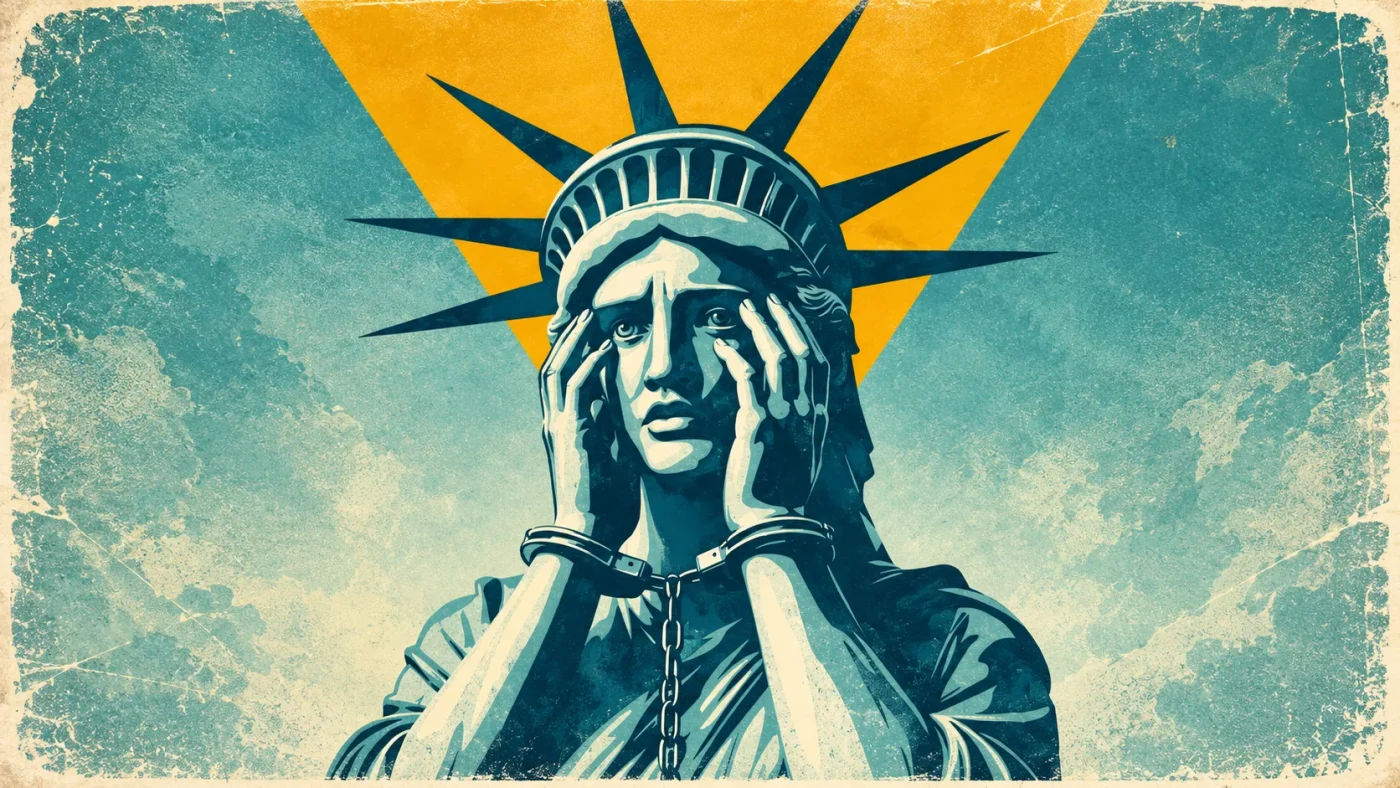
Few words in American politics are more abused than “freedom.” It appears on campaign stages, in courtrooms, in corporate advertising, in tax debates, and in public health arguments. Everyone wants to be its custodian. Almost nobody wants to ask the more awkward question: freedom for whom, and freedom from what?
The familiar American version of liberty is largely negative. Leave me alone. Let me decide. Keep the government out of my life.
That instinct has deep roots. John Stuart Mill’s On Liberty gave it perhaps its most influential formulation: coercion is justified when necessary to prevent harm to others, not merely to save competent adults from themselves. It is a powerful principle worth preserving. A government that assumes it knows what is best for everyone can become suffocating very quickly.
The trouble with seeing noninterference as the defining characteristic of freedom is that it subtly omits all other influences in determining a person’s actions.
No one makes a selection without a reason.
A teenager who opens TikTok for five minutes doesn’t make a middle-of-the-road choice of entertainment. A sports-betting customer who looks for odds at midnight on his mobile solely to satisfy his taste le phone doesn’t visit a marketpthat the solhis taste. The platform, the interface, the notification, the reward system, the advertising campaign and the business model are all working on him before he has made what we call a “free choice.”
One unpalatable truth of contemporary capitalist society is that companies don’t just react to people’s preferences. They increasingly make and shape them.
This should mess with our concept of freedom.
In plain terms, Sarah Conly makes this philosophical argument. In Against Autonomy and, more Autonomy, The Limits of Liberty, she critiques the Kantian notion that personal freedom or autonomy is good in itself. Her argument is consequentialist: freedom is worthwhile because of the good it can generate, and it is hard to see why preserving a particular liberty matters if it reliably causes serious harm when used.
The concept is risky, and it’s a risky one.
If we assert that freedom is good because it brings about desirable consequences, someone needs to define those consequences. Governments are not exactly known for their low estimates of their own capabilities. History is full of officials who pledged to keep people safe from their own errors and who did just that: they policed thought, belief, and dissent.
However, another threat lies on the other side of the coin: assuming that any society with virtually no regulations is a society with virtually no coercion.
It is not.
Imagine a neighborhood where a factory is permitted to dump waste into the river. The company has been “left free” to operate. But the families downstream have not been granted an equivalent freedom. Their freedom to drink clean water, raise healthy children, or use the land without paying for somebody else’s pollution has been diminished.
The absence of regulation did not eliminate coercion. It merely decided who would exercise it.
The same logic applies to the workplace. A worker may technically be free to reject an unsafe job. That freedom matters less when rent is due Friday, health insurance is tied to employment, and no meaningful alternatives are within commuting distance.
This is where the old libertarian vocabulary begins to creak.
A person can be formally free while being materially dependent. A consumer can be legally free while being psychologically manipulated. A worker may be contractually free but desperate during bargaining.
Political philosopher Philip Pettit offers an alternative in his book, Republicanism: freedom is not just noninterference; it’s non-domination. A person is unfree if another person has arbitrary power over him, whether or not that power is exercised at all.
That distinction is very important.
A boss who can fire you at will has power over you even when he’s on a good day. The renter who can impose ruinous conditions, not by threatening you, but because there’s nowhere else to go, has power over you. The digital platform, learning to keep you scrolling, practices another form of power, albeit one that feels familiar.
Today’s freedom increasingly means living within systems larger, wealthier, and more developed than the people who inhabit them.
But here the argument gets even crazier. Americans have grown suspicious of government paternalism and have accepted vast amounts of private paternalism without recognizing it.
Under a state regulation, the action is hazardous, and we call it an intrusion. We call what a technology company studies, predicts, organizes, and nudges towards profitable behavior innovation.
Cass Sunstein and Richard Thaler are the authors of a softer version of behavioral influence that they dubbed “choice architecture.” Their appeal in Nudge was that no one ever gets a completely neutral environment; someone is always setting it up. So the political question is whether that architecture benefits people or exploits them.
That’s a much better question than whether or not the government has been involved in the system.
Consider gambling apps. The user is free not to wager. However, the entire commercial model is geared toward making the next bet simple, instant, and “must-watch. Some social media platforms, ultra-processed food, targeted advertising, and other profit-driven industries whose success relies on repeat consumption can be described this way, too.
When does defending freedom come to sound indistinguishable from defending someone else’s business model?
That is why the American political discussion must be reset.
The decision isn’t one of freedom or control. It’s a childish way of expressing it. Coercion can take many forms, and various powers and institutions can be abused. A ban might be justified in one situation, but disastrous in another. A tax can be more effective than a ban. Architecture can do what punishment can’t.
The real question should be tougher: does a specific freedom expand people’s freedom as free human beings, or does it simply give powerful institutions more space to profit from people’s vulnerabilities?
There is no one right answer. Nor should there be, to be sure.
Some of the restrictions will be paternalistic and idiotic. Others will be required! Some business practices need regulation, and others do not. The state may defend the people against private power, but in the hands of an unaccountable political class, it can become a private power.
This tension can not be legislated.
It must be kept in sight.
The worst error in the American discussion of liberty is to suppose it starts where government leaves off. That’s where another form of power usually starts.
Freedom is not just having a door you’re permitted to pass through. It is being secure enough, knowledgeable enough, and able to stand up for itself, psychologically and otherwise, to choose whether to cross through it.
That’s a more difficult distinction of freedom.
It’s a more severe one too.
Comments
No comments on this report yet.
Be the first to join the desk.