 The Washington Probe
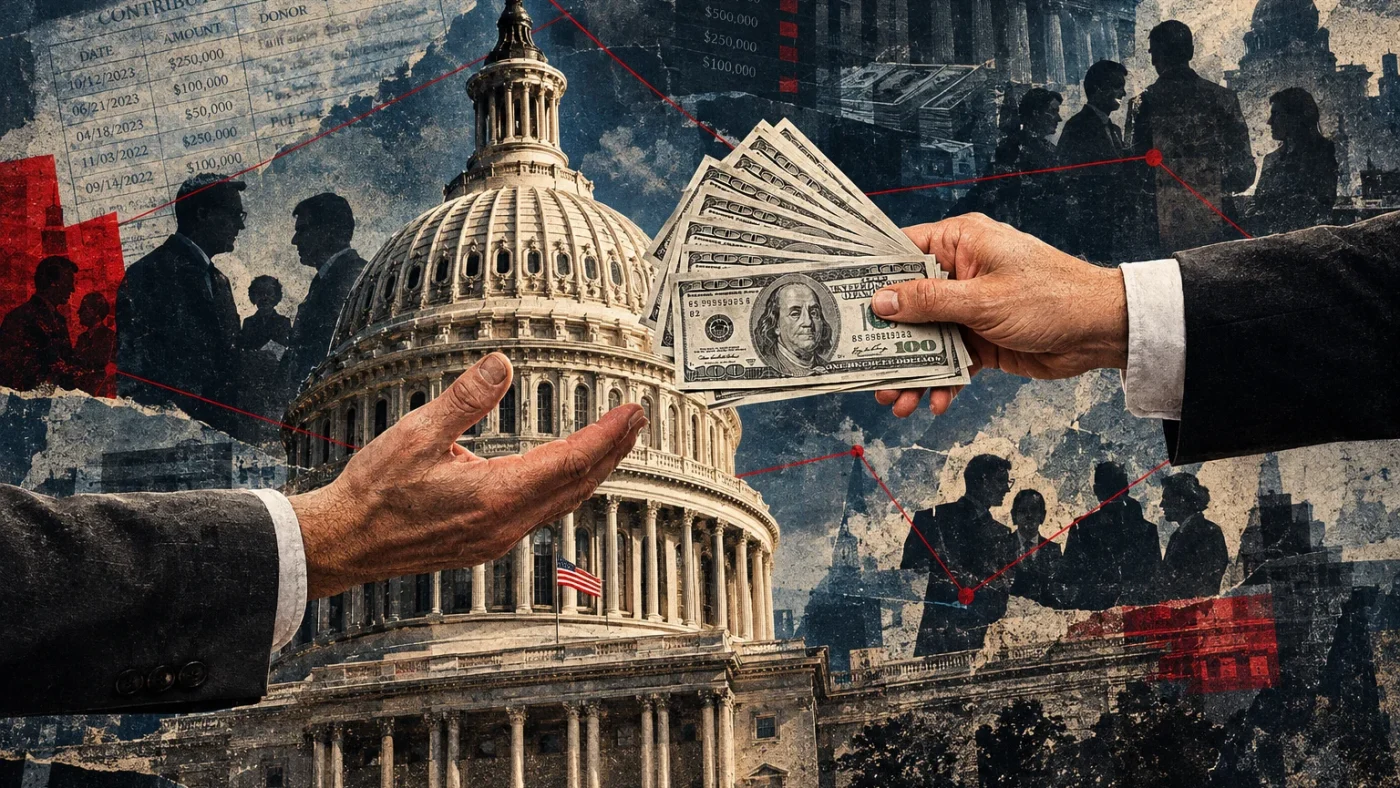
To Americans, concentrated wealth usually means tech founders, hedge-fund managers, and executives appearing on the Congress floor. However, much of that money isn’t in that spotlight; it’s in car dealerships, dental practices, commercial real estate, wholesale distributors, and regional construction companies.
The Everywhere Millionaire is a book by economists Owen Zidar and Eric Zwick that explores a group of private-business owners distinct from the small group of billionaires that can be found in the headlines. A Jacobin refers to an estimate of about three million rich households with about $55 trillion in wealth tied to private enterprises. What counts as those estimates matters, but the general idea is that America’s wealthiest people aren’t all in Silicon Valley or on Wall Street.
Many owners have identified a need, gambled a great deal of money and time, and built valuable businesses. The trouble begins when commercial success becomes permanent protection: special tax treatment, regulations that force competition out of the way, or a greater presence in the political arena than the people they serve.
A business begins by winning customers. It can mature into a business that wants to make sure nobody else gets the chance.
Take car dealerships. State franchise laws emerged partly because independent dealers could be vulnerable to powerful auto manufacturers. That concern was real. But rules meant to protect dealers can also limit competition, including manufacturers’ ability to sell directly to customers or open competing outlets.
A study in the Journal of Economic Perspectives, “Markets: State Franchise Laws, Dealer Terminations, and the Auto Crisis,” describes how dealership associations have influenced state laws that support dealer profitability, sometimes at the expense of consumers. A policy can start as protection for a weaker party and end up shielding established businesses from competition.
Occupational licensing raises a similar question. Some licensing is essential; nobody wants an unqualified surgeon or an unsafe electrician. But the Federal Trade Commission’s review of licensing notes that unnecessary requirements can reduce competition, raise prices, and make it harder for workers to enter a field. A professional association may call a new restriction a matter of standards. It can also help its members when fewer people can compete.
Privilege often manifests as rules that seem reasonable, one by one.
Local power is less like Hollywood than Washington politics. It appears at a planning commission meeting about a block that needs an apartment. It shows up at a planning commission meeting about an empty block seeking an apartment. The issues are parking, traffic, and neighborhood character. The payoffs are monetary, too.
Limiting new home construction can help maintain current home values and increase home prices and rents for non-homeowners. Non-rental homeowners have a direct interest in attending, while the rental community may be stymied by time constraints and similar incentives.
A 2023 Urban Institute study examined land-use bodies across hundreds of jurisdictions. In 99 percent of the jurisdictions studied, it found homeowners overrepresented and renters underrepresented. These boards decide who gets to live where, housing costs, and which businesses can open.
No one needs to command all orders from a mansion. Even if each owner feels they are protecting a neighborhood, rules restrict everyone’s use of the property. The net effect is that asset holders get a quiet leg up.
This can also show up in permitting and local contracts. A new company takes months to get the required paperwork; an established company knows the officials and the process. This does not automatically mean wrongdoing in every case. It does imply, however, that the playing field can become more difficult for those already there.
Federal policy reinforces some of these differences. Business income typically passes through to the owners of partnerships and S corporations and is reported on their own tax returns. This isn’t necessarily a bad arrangement; the income remains taxable, and many companies have good reasons to use these structures. It takes a different tax path than earning wages, though.
Eligible taxpayers can claim up to 20 percent of their qualified business income under the Section 199A deduction—with limits. The IRS describes the deduction here; employer wages don’t count toward it. An owner and an employee with similar earnings may face different rules because their income comes from different places.
That distinction compounds over time. Profits can finance another acquisition. Property can appreciate. A company can be passed to children or sold to fund a larger investment. Existing investors have even more options for converting what they earn into what they’ll have in the future, and more resources to employ advisers who know the rules.
Other causes of inequality exist beyond tax policy, and inequality is not the owner’s fault. However, the desirability of a tax break depends on who will gain and whether the public benefit is worth the cost, not merely on whether the beneficiaries are business owners.
There’s the familiar defense of local business: the owners sponsor the high-school team, employ neighbors, maintain the vitality of the main street. In many cases, yes. Also, it has nothing to do with it. An individual might do something positive for a community and still benefit from regulations that reduce housing availability, restrict professional competition, or keep new entrants from competing.
The costs fall on the renter who can’t afford it, the worker whose license isn’t accepted in other states, the customer who pays more because no one else does, and the would-be entrepreneur who can’t afford the regulatory red tape.
A serious response doesn’t mean being hostile to business owners. The question is whether the public purpose justifies the rules, who benefits, and who sets them. It means reviewing the rules of the road, dealership safeguards, tax breaks, local deals, zoning, and more, not just campaign deposits and lobbying in Washington.
American economic strength is diffused among private enterprises and local agencies and is frequently touted as being “just the business of business” or “just the business of administration. The people who benefit may never appear on a magazine cover. They do not need to.
Sometimes the ladder is not pulled up in public. Sometimes the people who climbed it simply change the rules for everyone coming after them.

Comments
No comments on this report yet.
Be the first to join the desk.