 The Washington Probe
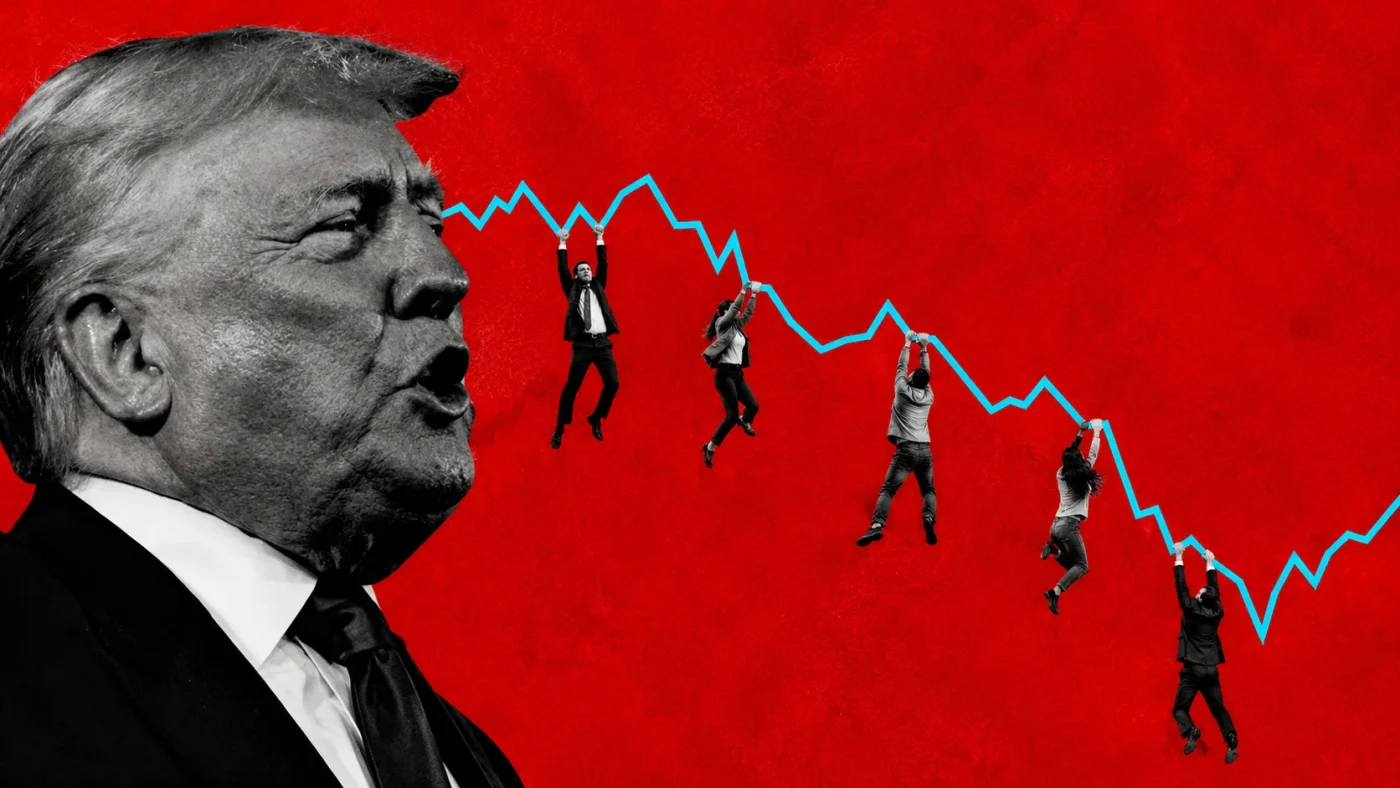
Trump can say the economy is “alright.” The numbers do not describe an economy in collapse—but they do describe one in which prices are accelerating, real wages are slipping, and hiring has nearly stalled. The more uncomfortable story is not economic disaster; it is the widening gap between Washington’s definition of success and what households can actually afford.
For much of the past year, the political argument over the economy has been reduced to a familiar contest of competing headlines. One side points to unemployment. The other points to grocery bills. One cites growth. The other asks why paychecks disappear so quickly.
The latest data make the argument harder to dismiss as partisan noise.
The consumer price index rose 0.6 percent in September, faster than the 0.4 percent gain in August. Prices are up 3.7 percent over the past year and 3.4 percent month over month. While not quite in the same league as the extreme inflationary periods toward the end of the worst of the post-pandemic shock, the direction is the important thing. The underlying problem has not vanished simply because the rate of increase is lower than it once was.
That distinction is easy to obscure and politically useful to ignore.
A slower increase in prices is not the same thing as a return to lower prices. Once the price level rises, consumers continue to live with that higher baseline. A family that has spent years adjusting to more expensive housing, transportation, food, and services does not experience a declining inflation rate as a restoration of purchasing power. It experiences it as prices becoming expensive more slowly.
September offered an especially brutal example. Gasoline prices rose 9.1 percent in a single month and were 34.2 percent higher than a year earlier. The overall energy index climbed 20.4 percent over the year. Energy alone accounted for more than half of the monthly increase in the headline consumer price index.
Those numbers matter because gasoline is not an abstract economic category. People encounter and pay for it repeatedly and directly. It affects commuters, delivery workers, truckers, small businesses, and families driving children to school or visiting relatives. An inflation report may contain dozens of complicated components, but a jump at the pump requires no explanation from an economist.
There were better signs elsewhere. Overall food prices were unchanged in September, while food-at-home prices fell 0.1 percent. Food prices were up 2.5 percent over the year, a considerably less dramatic increase than energy. Some goods were also cheaper than a year earlier, including used cars, medical care commodities, and motor vehicle insurance.
That matters because the economy is not uniformly bad. And that is precisely what makes the political argument more complicated.
The United States is not experiencing an economic depression. Unemployment stood at 4.2 percent in September. But payroll employment rose by only 29,000 jobs, with employment barely changing across major industries. The average monthly job gain over the preceding 12 months had been 45,000.
That is a labor market losing momentum without producing the kind of catastrophe that immediately dominates headlines.
Then comes the number that may matter most: wages after inflation.
Real average hourly earnings fell 0.5 percent between August and September. Over the year, they declined 0.7 percent. Real average weekly earnings also declined 0.5 percent in September and were 0.1 percent lower than in the previous year. Real hourly earnings decreased 0.6 percent for production and nonsupervisory workers over the year.
This is where the argument over the economy stops being a battle of political narratives and becomes a question of purchasing power.
Nominal wages can rise while workers become poorer in real terms. A 3 percent raise means little if the cost of living rises faster. The relevant question for households is not whether the number on the paycheck has increased. It is whether that paycheck buys more.
In September, it bought less.
That creates a politically awkward situation for any administration claiming a clear economic victory. The unemployment rate can remain relatively low. Payrolls can continue to increase. Some prices can stabilize. Yet if real earnings are declining, workers have reason to feel that the economy is moving in the wrong direction.
This is one reason economic statistics can produce such contradictory political messages. Aggregate indicators describe an economy from above. Household budgets describe it from below.
From above, the United States still has a functioning labor market and no generalized recession. From below, a worker can look at a paycheck, a gasoline receipt, a rent bill, and a credit-card statement and reach a very different conclusion.
The danger for the Trump administration is therefore not necessarily an economic crash. It is a credibility problem.
Part of Trump’s political success rests on his ability to see the economic truth more clearly than other political institutions. That approach only works if voters think the description is true. When the administration claims it is making services more affordable, but energy costs are rising and inflation-adjusted wages are falling, the dispute becomes bigger than inflation. It becomes a battle of truths: whose truth is real?
There is also the danger of replacing all negative economic indicators with factors outside the President’s control. Oil shocks, wars, global supply chains, and monetary conditions all matter. They can give reasons for a specific price change. They are not a simple guide to defining an administration’s economic success.
It’s a distinction that matters. Economists recognize the influence presidents can have on the economy, but the president doesn’t set all prices. Nor can any given month’s report substantiate the overall deterioration or improvement of any administration. September’s figures are evidence of a condition, not a complete verdict on policy.
However, politics is not a single perfect statistical indicator; it is based on accumulated experience.
When they see the economy through the lens of what’s left after paying their bills, voters will eventually reach that conclusion when prices keep rising faster than wages, hiring continues to lag behind recovery expectations, and energy costs stay high. The danger for Trump is that a country can maintain respectable headline statistics while households become increasingly convinced that prosperity is something happening somewhere else.
That is the central economic contradiction the administration faces.
America does not need to enter a recession for an affordability crisis to become politically explosive. It only needs workers to conclude that they are working inside an economy that is growing without making their lives materially easier.
The economy may be “alright” by the standards of a spreadsheet.
For millions of households, the more important question is whether it is alright after the rent, groceries, gasoline, and paycheck are put on the same table.
Right now, the numbers suggest an uncomfortable answer: not quite.

Comments
No comments on this report yet.
Be the first to join the desk.